Jumping a Car Battery: Complete Step-by-Step Guide (2026)
A Complete Step-by-Step Guide to Safely Jump-Starting Your Car—and When to Call Roadside Assistance
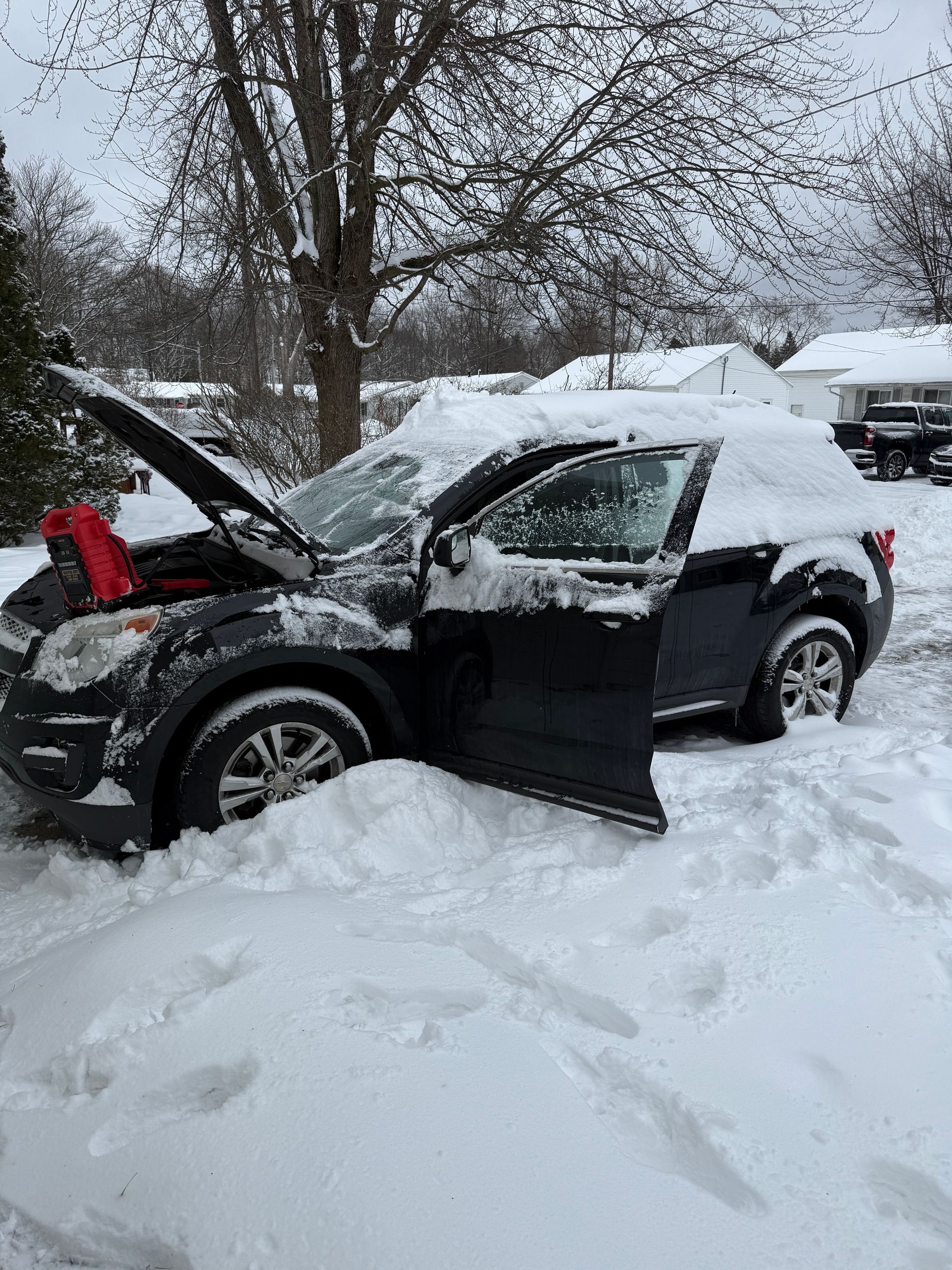
When your car won't start and you're stranded with a dead battery, knowing how to properly execute jumping a car battery can save you time, money, and frustration. This essential automotive skill requires the right equipment, proper technique, and careful attention to safety protocols to avoid damage to your vehicle's electrical system or personal injury.
Whether you're dealing with a battery that's been drained by leaving lights on overnight or facing the challenges of cold weather starting, this comprehensive guide will walk you through everything you need to know about jump-starting your vehicle safely and effectively.
Essential Equipment for Jumping a Car Battery
Before attempting to jump-start your vehicle, you'll need the proper equipment. Quality jumper cables are your most important tool, but several other items can make the process safer and more successful.
Standard jumper cables should be at least 12 feet long with heavy-duty clamps and thick copper wiring. Look for cables rated for at least 400-600 amps for most passenger vehicles, or 800+ amps for larger trucks and SUVs. The cable gauge should be 4 to 6 AWG for optimal power transfer.
Pro Tip: Always keep a pair of insulated work gloves, safety glasses, and a flashlight in your emergency kit. These items significantly improve safety when jumping a battery in low-light conditions or adverse weather.
Additional helpful equipment includes:
- Portable jump starter(eliminates need for second vehicle)
- Wire brush for cleaning corroded terminals
- Baking soda and water for neutralizing acid corrosion
- Digital multimeter for testing battery voltage
- Emergency roadside assistance contact information
Safe Jump-Starting Procedures: Step-by-Step Guide
Proper technique when jumping a car battery prevents electrical damage and ensures your safety. Follow these detailed steps in the exact order presented to minimize risks and maximize success rates.
Pre-Jump Safety Inspection
Before connecting any cables, inspect both vehicles and the surrounding area. Ensure both cars are parked on level ground with parking brakes engaged. Turn off all electrical accessories, lights, and ignition systems in both vehicles. Check for any obvious damage to batteries, terminals, or cables.
Look for signs of a cracked or leaking battery case, which indicates the battery should not be jumped and requires professional replacement. If you notice a strong sulfur smell or visible corrosion around terminals, clean the area before proceeding.
Proper Cable Connection Sequence
The order of cable connections is critical for preventing electrical surges and sparks near the battery. Always connect cables in this specific sequence:
- Red cable to dead battery positive terminal(marked with + symbol)
- Red cable to good battery positive terminal
- Black cable to good battery negative terminal(marked with - symbol)
- Black cable to unpainted metal ground in dead car's engine bay (NOT the negative terminal)
The final ground connection should be made to a solid metal component away from the battery, such as an engine block bolt or designated grounding point. This prevents sparks near the battery, which could ignite hydrogen gas.
Starting the Vehicles: Timing and Technique
Once cables are properly connected, start the working vehicle and let it run for 2-3 minutes to begin charging the dead battery. Rev the engine slightly to 1500-2000 RPM to increase alternator output and speed up the charging process.
After allowing adequate charging time, attempt to start the dead vehicle. Turn the key firmly but avoid cranking for more than 10-15 seconds at a time. If the engine doesn't start immediately, wait 2-3 minutes between attempts to prevent starter motor damage.
If the vehicle starts successfully, keep both engines running for several minutes before disconnecting cables. This allows the alternator in the previously dead vehicle to begin recharging the battery independently.
Common Mistakes That Can Damage Your Vehicle
Several critical errors can result in expensive electrical system damage when jumping a car battery. Reverse polarity connections represent the most dangerous mistake, potentially causing alternator failure, blown fuses, or computer module damage in modern vehicles.
| Common Mistake | Potential Consequences | Prevention Method |
|---|---|---|
| Connecting cables in wrong order | Electrical surge, blown fuses | Always follow proper sequence |
| Touching cable ends together | Sparks, cable damage | Keep clamps separated |
| Leaving lights/accessories on | Reduced charging efficiency | Turn everything off first |
| Using damaged cables | Poor connection, safety risk | Inspect cables before use |
| Cranking too long | Starter motor overheating | Limit to 10-15 second intervals |
Modern vehicles with sophisticated computer systems are particularly vulnerable to voltage spikes during jump-starting. Always ensure cable connections are secure and avoid allowing the running vehicle's RPMs to exceed 2500 during the charging process.
Troubleshooting When Jump-Starting Fails
If your initial jump-start attempt doesn't succeed, several factors could be preventing proper operation. Battery age and condition play crucial roles in jump-start success rates, as batteries older than 4-5 years may not hold sufficient charge even after jumping.
Check for these common issues when jump-starting fails:
- Corroded or loose battery terminals preventing proper electrical contact
- Extremely cold temperatures reducing battery capacity by 30-50%
- Completely discharged battery requiring extended charging time
- Internal battery damage from overheating or freezing
- Faulty starter motor or ignition system components
Important: If jump-starting fails after 2-3 attempts with proper technique, the issue likely extends beyond a simple dead battery. Continued attempts may damage electrical components and should be avoided.
In cold weather conditions below 20°F, batteries may require 5-10 minutes of charging before attempting to start. Consider moving the vehicle to a warmer location if possible, or contact professional roadside assistance for specialized cold-weather starting equipment.
When to Call Professional Roadside Assistance
While jumping a car battery is often a straightforward process, certain situations require professional intervention to prevent damage or ensure safety. Modern luxury vehicles and hybrids often have complex electrical systems that can be damaged by improper jump-starting procedures.
Contact professional roadside assistance in these scenarios:
- Battery shows signs of physical damage or leaking
- Vehicle has been sitting unused for several months
- Multiple jump-start attempts have failed
- You're uncomfortable with the procedure or lack proper equipment
- Weather conditions make the process unsafe
- Vehicle is in a dangerous location (busy highway, steep incline)
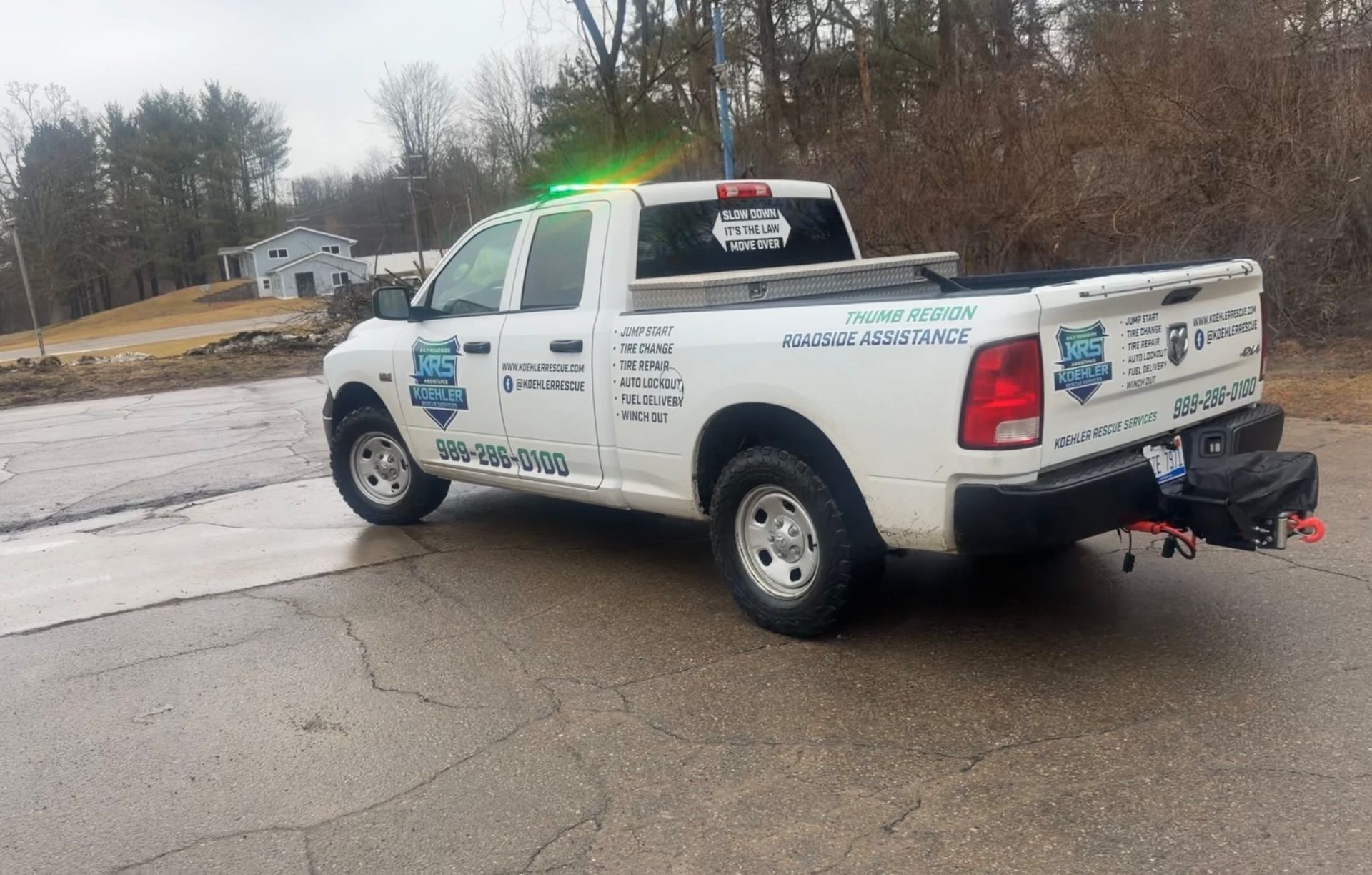
Professional technicians have specialized equipment including high-capacity portable jump starters, battery testing equipment, and experience with various vehicle types. Our team at Koehler Rescue handles over 1,500 roadside assistance calls annually across Michigan's Thumb Region, with a 98% success rate for battery-related issues.
Battery Maintenance to Prevent Future Problems
Preventive maintenance significantly reduces the likelihood of battery failure and the need for emergency jump-starts. Regular battery testing should be performed every 6 months, especially before winter and summer seasons when extreme temperatures stress battery performance.
Key maintenance practices include:
- Clean terminals monthly using a wire brush and baking soda solution
- Check electrolyte levels in serviceable batteries
- Test battery voltage with a multimeter (should read 12.6V when engine off)
- Inspect for corrosion and apply terminal protectant spray
- Replace batteries proactively after 4-5 years
Cold weather particularly impacts battery performance, reducing capacity by up to 50% at temperatures below 0°F. Consider using a battery tender or block heater during extended cold periods to maintain optimal battery condition.
Alternative Solutions: Portable Jump Starters
Portable jump starters have revolutionized roadside emergency preparedness, eliminating the need for a second vehicle when jumping a car battery. These compact devices typically provide 400-2000 peak amps and include additional features like USB charging ports, LED flashlights, and air compressors.
Modern lithium-ion jump starters offer several advantages over traditional jumper cables:
- Independence from other vehicles
- Compact size for easy storage
- Built-in safety features preventing reverse polarity
- Multiple charging capabilities for electronic devices
- Longer shelf life and faster charging times
When selecting a portable jump starter, choose one rated for at least 150% of your vehicle's engine displacement. A 4-cylinder engine typically requires 400-600 peak amps, while V8 engines may need 800+ amps for reliable starting.
Frequently Asked Questions
How long should I let the good car run before starting the dead car?
Allow the working vehicle to run for 2-3 minutes minimum before attempting to start the dead car. In extremely cold conditions or with a severely discharged battery, extend this to 5-10 minutes. The alternator needs time to begin charging the dead battery sufficiently for starting.
Can I damage my car's computer by jump-starting?
Modern vehicles can be damaged by improper jump-starting procedures, particularly if cables are connected incorrectly or if voltage spikes occur. Always follow proper connection sequences and avoid revving the donor vehicle above 2500 RPM during the process to minimize risk of electrical system damage.
Why won't my car stay running after a successful jump-start?
If your vehicle starts but dies immediately after disconnecting jumper cables, the alternator may not be generating sufficient charging current, or the battery may be too damaged to hold a charge. Drive immediately to an auto parts store or mechanic for battery and charging system testing.
Is it safe to jump-start a car in the rain?
Jump-starting in light rain is generally safe if proper precautions are taken, but avoid the procedure during heavy rain or storms. Ensure all connections are secure and avoid standing in puddles. If conditions are unsafe, contact professional roadside assistance rather than risking electrical shock or injury.
How do I know if my battery needs replacement after jump-starting?
If your battery requires jump-starting more than once within a few weeks, or if it fails to hold a charge overnight, replacement is typically necessary. Batteries older than 4-5 years should be tested professionally, especially if jump-starting becomes a recurring issue.
Successfully jumping a car battery requires proper equipment, careful attention to safety procedures, and understanding when professional assistance is necessary. By following these detailed guidelines and maintaining your battery proactively, you can handle most dead battery situations safely while knowing when to call for expert help. Remember that safety should always be your primary concern, and when in doubt, professional roadside assistance provides the expertise and equipment to resolve battery issues quickly and safely.